It goes without saying that hospital stays should be avoided at all costs. One especially good reason is that the food is often a more unpleasant experience than the medical condition itself. ‘Invalid food’ always sounds unappetising – which is ironic as one of its main functions is to tempt the appetite - and ‘Institutional food’ is equally unappealing: put both of these together and you get hospital food.
Exceptions do prove the rule however, and if you were lucky enough to be a patient at at St. Luke’s Hospital in Chicago on this day in 1921, you could chose from this daily menu:
BREAKFAST Fruit Cream of Wheat Post Toasties Little Pork Sausages Apple Pancake Plain Rolls Jelly Toast Tea Coffee Chocolate.
SUPPER Bouillon in Cups Broiled Lamb Chops Escalloped Potatoes Green Peas Pear Sauce Sugar Cookies Toast Tea Coffee Chocolate
There are a couple of brief nods to invalid cuisine – clear consommé and ice-cream would be suitable for delicate digestive systems for example – but the rest of the menu could easily have come from a restaurant kitchen. Roast duck? What sort of medical condition indicates a prescription of roast duck for dinner? How do I catch that disease?
It was probably not the cost or danger of hospital food that the Lydia E. Pinkham persona had in mind in the blurb for 'her' famous Medicinal Compound: ‘Any hospital experience is painful as well as costly and frequently dangerous. Many women have avoided this experience by taking Lydia E. Pinkham's Vegetable Compound in time, thereby relieving the present distress and preventing the development of conditions that might require an operation.’
The success of this particular patent medicine had nothing to do with the fact that it was 40% proof - Prohibition was well underway, and ‘ladies’, would surely not have used it without serious medical need. Its success must have been solely due to the clever marketing, part of which included publishing a promotional cookbook called Food and Health in the same year as our menu. Here is a recipe from the book which is suitable for everyone whatever their state of health, for it contains two essential food groups – bread and chocolate.
CHOCOLATE BREAD PUDDING Ingredients 2 cups bread crumbs4 cups of milk (or 2 of water and 2 of evaporated milk)2 squares chocolate⅔ cup sugar1 salt spoon salt1 teaspoon vanilla Method—Soak bread crumbs in milk until soft. Melt the chocolate over hot water and add the sugar to it. Beat eggs well and add with the remaining ingredients to the crumbs and milk. Mix well and bake in a buttered pudding-dish in a moderate oven, until thick and firm. A Meringue of egg white and sugar may be spread over the top about 15 minutes before it is done, or it can be served with cream, hard, or foamy sauce. Hard Sauce—⅓ cup butter, 1 cup powdered sugar, ⅓ teaspoon lemon extract, ⅔ teaspoon vanilla. Cream the butter, add sugar gradually, and flavoring.
Tomorrow’s Story …
Pioneers and Persimmons.
A Previous Story for this Day …
On this day last year we had a recipe from Nostradamus.
If your doctor does not think it good for you to sleep, to drink wine, or to eat of a particular dish, do not worry; I will find you another who will not agree with him. Michel de Montaigne.
One of the earliest restaurant reviewers was Lieut.-Col. Newnham-Davis, who ate his way around London at the end of the nineteenth-century. He compiled his reviews in a book called ‘Dinners and Diners: Where and How to Dine in London’, and in it he describes his meal at a kosher restaurant in Bloomfield St called Goldstein’s on this day in 1899. He explained his choice thus:
'The raison d’être of the dinner was this: Thinking of untried culinary experiences, I told one of the great lights of the Jewish community that I should like some day to eat a “kosher” dinner at a typical restaurant, and he said that the matter was easily enough arranged; and by telegram informed me one day last week that dinner was ordered for that evening at Goldstein’s restaurant in Bloomfield Street, London Wall, and that I was to call for him in the City at six.'
The menu was:
HORS-D'OEUVRE.
Smoked Salmon. Solomon Gundy. Olives.
SOUPS
Frimsell. Matsoklese. Pease and beans.
FISH.
Brown stewed carp. White stewed gurnet.Fried soles. Fried plaice.
Spinach. Sauerkraut.Potatoes. Cucumbers. Green salad.
SWEETS.
Kugel. Stewed prunes. Almond pudding. Apple staffen.
Even this enthusiastic trencherman was a little fazed by the quantity of food:
'When I looked at the above I groaned aloud. Was it possible, I thought, that any human being could eat a meal of such a length and yet live? I looked at my two companions, but they showed no signs of terror, so I took up knife and fork and bade the waiter do his duty.'
The Colonel manages to perform his own duty admirably, but finishes by saying: ‘I think that a “kosher” dinner, if this is a fair specimen, is a succession of admirably cooked dishes. But an ordinary man should be allowed a week in which to eat it.’
Like all good reviewers, the Colonel looked upon his dining experiences as an opportunity to learn. At the outset he says 'I had asked to have everything explained to me.' His first puzzle came very early in the meal with the “Solomon Gundy”, which sounds unnervingly like a human name. Now, although I am not Jewish, I am quietly confident that human flesh is not, and has never been kosher. So what then, is “Solomon Gundy’? The Colonel says:
‘Of the hors-d’oeuvre, Solomon Gundy, which had a strange sound to me, was a form of pickled herring, excellently appetising.’
In other words it is a variant spelling of salmagundy (or salad-magundy, salmogundy, salmagundi ….) – a piece of information which takes us marginally closer to knowledge but still a long way from wisdom. The OED does seem to have trouble with a lot of food words, and this one is yet another with ‘obscure origins’, although an Italian parentage is suspected. It gives the definition as ‘A dish composed of chopped meat, anchovies, eggs, onions with oil and condiments.’
There are many recipes for salmagundy in seventeenth and eighteenth century books, and just about anything goes as far as ingredients are concerned, although herrings and anchovies do seem to predominate as they did in the Colonel’s meal.
The following recipe from 1764, is from English Housewifery Exemplified by Elizabeth Moxon. She specifies it as being suitable for Lent, but it would seem to the non-Jewish me to be also entirely suitable for a kosher meal. I eagerly await comment from Jewish readers.
To make SOLOMON GUNDY to eat in Lent Take five or six white herrings, lay them in water all night, boil them as soft as you would do for eating, and shift them in the boiling to take out the saltness; when they are boiled take the fish from the bone, and mind you don’t break the bone in pieces, leaving on the head and tail; take the white part of the herrings, a quarter of a pound of anchovies, a large apple, a little onion shred fine, or shalot, and a little lemon-peel, shred them all together, and lie them over the bones on both sides, in the shape of a herring; then take off the peel of a lemon very very thin, and cut it in long bits, just as it will reach over the herrings; you must lie this peel over every herring pretty thick. Garnish your dish with a few pickled oysters, capers, and mushrooms, if you have any; so serve them up.
Tomorrow’s Story …
Feeding the Sick.
A Previous Story for this Day …
The story on this day in 2005 was about Kosher banquet was held during the Colonial Conference in England in May 1907.
Quotation for the Day …
To remember a successful salad is generally to remember a successful dinner; at all events, the perfect dinner necessarily includes the perfect salad. George Ellwanger Pleasures of the Table (1902)
Your Birthday Food History ...
If you want to find out what happened in Food History on your birthday (or someone else's) , buy a virtual raffle ticket for prize AP13 in the Menu for Hope campaign. Lots of other great prizes too - meals at some of the best restaurants in the world, books, wine, hotel stays, photography lessons, web designs. To find out more, click on the images in the sidebar.
There is an old legend in the wilder parts of Scotland that says it is very unlucky to go to bed without any supper on this night. If you do, the fairies will carry you off over the rooftops to ….. Fairyland, presumably, although the myths stops before we get there. It is St Finnian’s Day and the Eve of the feast of St Lucia, one or both of whom seem to be implicated in the mischief, as if their stories have been blended with old Northern beliefs about fairies being generally on the rampage at this time.
Until further research reveals just what exactly we can expect to find in Fairyland, it might be best not to take any risks on this night, just in case. So, let us be mindful of our supper, and make plans early in the day for this meal.
‘Supper’, says the OED is ‘formerly, the last of the three meals of the day (breakfast, dinner, and supper); now applied to the last substantial meal of the day when dinner is taken in the middle of the day, or to a late meal following an early evening dinner.’ Whichever it is, it is always an informal meal. The British Tradition definitely requires a savoury dish, and the Scot Tradition is to be ‘canny’ in all things, so we should look for something thrifty for our supper tonight.
A very sensible book to help the busy housewife in 1934 called ‘Economical Cookery and menus for every day in the year’ suggests, for the Tuesday of the fiftieth week of the year:
Breakfast: Stewed figs; Fish cakes; Toast and Marmalade. Mid-Day Meal: Fricassée of Veal; Potatoes; Cauliflower and Sauce; Bread and Butter Pudding. Evening Meal: Celery Soup; Toasted Cheese; Rice Pudding.
Clearly, Mrs D. D. Cottington Taylor is planning her menu according to the first definition of supper. It is refreshing to see that she does not believe in stinting on the puddings, and reassuring too, on this night when we need to be too heavy for the fairies to carry. Also interesting for our purposes is the ‘Toasted Cheese’ dish which is really a version of Welsh Rabbit – a dish which we have enjoyed featuring on this site. We are always on the lookout for new-old ideas for Cheese on Toast, and we have certainly never before had a recipe for it that uses tapioca.
Toasted Cheese (a new way) ½ pint milk; ½ oz. seed-pearl tapioca; pepper; salt, and made mustard; 4 oz. grated cheese. Put the milk onto boil and, when boiling, sprinkle in the tapioca; simmer for 15-20 minutes, or until the tapioca is thoroughly cooked. Add the made mustard, pepper, salt, and grated cheese, and blend well. Pour onto slices of hot buttered toast, and brown under the grill.
Further recipes for variations on a theme of Welsh Rabbit are HERE and HERE and HERE.
Quotation for the Day … My favorite sandwich is peanut butter, baloney, cheddar cheese, lettuce, and mayonnaise on toasted bread with catsup on the side. Attributed (often) to U.S SenatorHerman Loin Humphrey.However, as pointed out by the eagle-eyed and elephant-brained Gary Allen, the good senator died in 1902, and the first recorded use of the word, according to the OED, is significantly later than that. Please - help us solve the problem: did someone else say the words? did the Senator actually say 'poloney' not 'baloney'?
"Menu for Hope III" is the food-blogging world's fund-raising program for the World Food Program. You can buy virtual raffle tickets at US$10 in an incredible range of prizes which includes books, food treats, and meals at some of the World's best restaurants. Click on the images in the sidebar to find out more about the program and the prizes. For information about the prize donated by The Old Foodie, click on the "menu" image, or just scroll down.
Would you like to know the Food History of your birthday? Or some other special day?
You are presumably interested in the historical aspects of food if you are reading this blog. If you would like a chance to win a personalised food history for the day of your choice, and at the same time to make a contribution to helping the world's hungry, please read on.
As part of the international food-blogging community's effort to raise money for "Menu for Hope III" I am offering a prize of a personalised "Food History of the Day", for any day of the year that the winner cares to chose. This is the first time I have been involved in a blogging effort such as this and I am delighted.
First: the background.
Last year food bloggers around the world raised $17,000 for UNICEF. This year the campaign is in aid of the World Food Program, which was set up in 1963 as the United Nations frontline agency in the fight against global hunger. In 2003, the WFP fed 104 million people in 81 countries, including refugees and internally displaced people and families left homeless by natural disaster. WFP relief workers do whatever it takes to get food to those in need.
Next: how you can participate.
Some fantastic prizes have been donated all around the world. You can buy raffle tickets for as many of these as you wish, for US$10, between now and December 22nd. The winners will be announced on January 15th 2007. The details as to what prizes are available, and how to buy tickets are below, but before you jump ahead, here is what I am offering as my prize.
"Food History of Your Day".
I will write a food history for any day of the year chosen by the winner. It will be somewhere between 4-8 pages, and will include all sorts of facts and factoids on events and people and publications that are associated with that exact day. There will certainly be historic diary entries, and at least one historic menu. Naturally there will be several historic recipes that fit the events or people of the day.
It would make a great gift for a food-lover who has everything - it might even inspire a birthday dinner based on the menu of the day! If the winner cares to give me some personal details (not too personal!) for the desired recipient, I can personalise it even further.
I undertake to complete this within a week of the winner advising me of the date and any other information. I can email or snail-mail the history.
For more information:
The main instigator and host is Pim at Chez Pim. The complete list of prizes will be on Pim's site.
The Regional host for the Asia-Pacific region is Helen at Grab Your Fork.
2. Make a donation. Each $10 will give you one raffle ticket toward a prize of your choice. Please specify which prize or prizes you'd like in the 'Personal Message' section in the donation form when confirming your donation. Do tell us how many tickets per prize, and please use the prize code -for example, a donation of $50 can be 2 tickets for AP01 and 3 for AP02.
3. For US donors, if your company has agreed to match your charity donation, please remember to check the box and fill in the information so we may claim the corporate match.
4. Please also check the box to allow us to see your email address so that we could contact you in case you win. Your email address will not be shared with anyone.
5. Check back on Chez Pim on January 15 when we announce the results of the raffle. (The drawing will be done electronically. Our friend the code wizard Derrick at Obsession with Food is responsible for the wicked application that will do the job.)
Thankyou in Advance.
Please help this great international project. Ten dollars is a mere 2-4 cups of coffee from the coffee-shop of your choice. Unless you frequent very expensive coffee shops of course, in which case it might only be one cup of coffee. And if you can afford $10 for one cup of coffee you can afford to make a generous donation!
REMINDER: the code for the personalised Food History is AP13.
Today Geneva celebrates “La Escalade”, or “Scaling Day”, and a great deal of fun (and food) is had by all. The day is the anniversary of the successful repulsion of the forces of the French Duke Charles-Emmanuel of Savoy in 1602 by the citizens of the city. The Duke had intended that two thousand of his men would scale the city walls by means of ladders, in the secret dead of night. The plot was foiled when Mère Catherine Royaume who lived with her family above one of the city gates, heard a noise, looked out, and promptly threw a hot pot of soup (and perhaps the pot itself) over the wall, killing one soldier - but not before he had made even more noise, thus alerting the whole city.
The townspeople generally have a good time on this day parading, dressing up, symbolically smashing soup “marmites” while singing patriotic songs and enjoying the fact that they did not become French citizens. Naturally, food figures in the fun. It is winter, so mulled wine and hot chestnuts are popular, and of course soup is cooked and eaten, but, – this is Switzerland, after all - there is also much consumption of chocolates made in the form of soup pots filled with marzipan vegetables.
We can probably safely assume that the Mère Royaume’s hot pot was a large one, as the good mother had fourteen children. Presumably she was up at that hour with one of the little ones, and thought she would cook the next day’s dinner while she was about it. No official recipe appears to exist, but legend suggests it was a vegetable soup.
By a co-incidence that is very convenient, a charming little English book published in 1927 by Christina B. Peacock and called 'The Practical Daily Menu' has a “Hot Pot” for dinner on this very day. It is decidedly neither a vegetable dish nor a soup, but it will serve us well enough today by virtue of its name. Ms Peacock does give a recipe for a bean soup too, should you wish to stay true to the theme.
Hot-Pot. Mutton chops; 1 sheep’s kidney; 2 potatoes; 1 onion; salt; pepper; 1 teaspoonful Lemco*; ½ teacupful water. Grease a fire-proof dish and put in a layer of thinly sliced potate, a layer of shredded onion, pepper and salt, then place in the chops and sliced kidney, and put another layer of potato, followed by onion. Season, add the water and Lemco, place on lid, and cook in a slow oven for two hours.
*Lemco = a commercial beef extract.
Haricot Bean Soup. ½ lb. haricot beans; 1 Spanish onion, 1 small turnip; 1 oz butter or good dripping; 1 ½ breakfastcupfuls milk; salt; pepper; 3 pints water; 3 tablespoons chopped parsley. Soak the beans overnight in cold water with a pinch of baking soda added. Have three pints of water in a pot, add the onion scaled and shredded, the turnip cut small, dripping, and beans. Boil for three hours, strain and rub through a sieve. Add milk, seasoning, and chopped parsley, and stir till it comes to boiling-point. Serve with sippets of toast.
Tomorrow’s Story …
The Importance of Supper.
Quotation for the Day …
I would like to find a stew that will give me heartburn immediately, instead of at three o clock in the morning. John Barrymore, actor.
A recipe for a First World War Cornmeal Gingerbread (with rye and buckwheat variations) from the US Food Administration has been added to the Through the Ages with Gingerbreadfeature. Also added are two recipes from a cookbook published by the Yorkshire Observer in 1934-5, and one from the late nineteenth century which contains ginger in syrup and can be adapted as a pudding.
The beautiful Jean Becu, Comtesse Du Barry was guillotined on this day in 1793, in her fiftieth year. She did not go quietly - weary and accepting - like Marie-Antoinette. In her last hysterical moments she wept and pleaded with the executioner for "Encore un moment, monsieur le bourreau, un petit moment". A sad and undignified end for a beautiful woman who had had an undignified beginning as an illegitimate seamstress but – thanks to her great beauty - rose to enjoy a powerful and extravagant life as a courtesan and the last mistress of Louis XV.
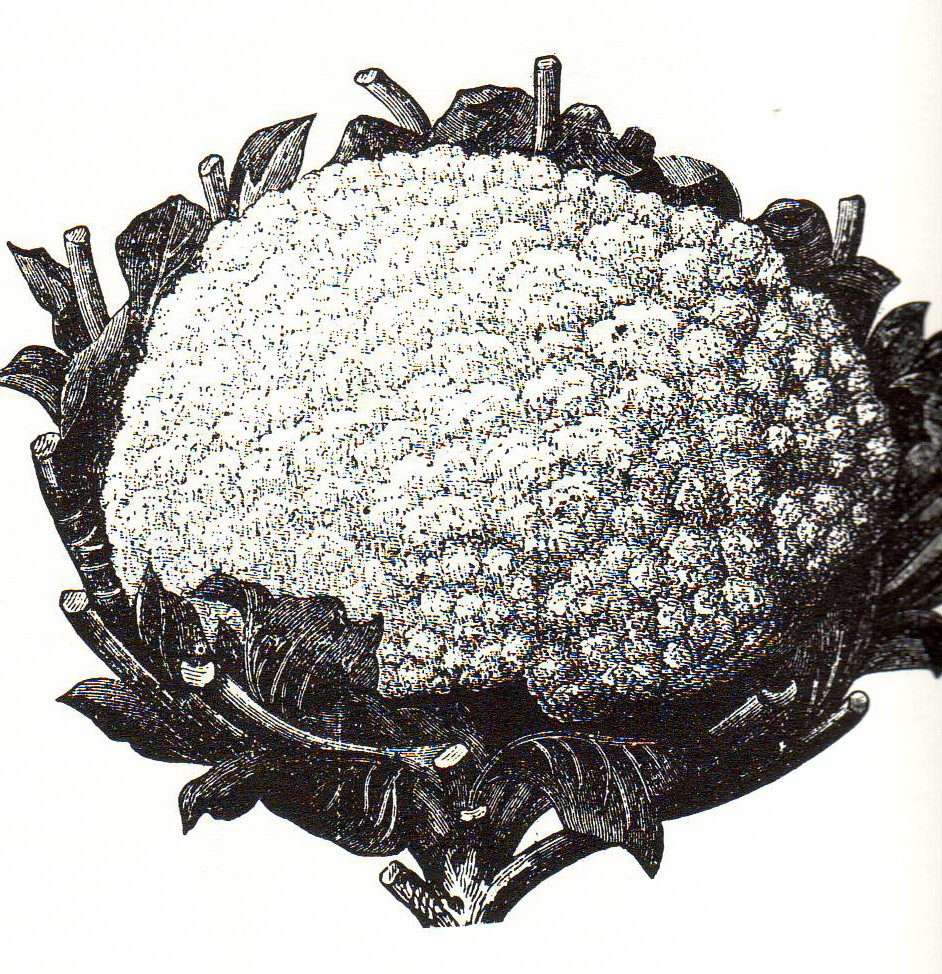
Her name has become associated with a number of dishes based on cauliflower. There was certainly a fashion a century or so later for naming dishes after the rich and famous, but why cauliflower and Mme. Du Barry? Perhaps the white cauliflower suggested her fine pale skin, or powdered wig – or the complicated design of the wig itself? Perhaps it is the sheer, velvety voluptuousness of the Mornay sauce that is a traditional part of the garnish “à la du Barry”?
Before we move on to recipes, let us pause and consider the cauliflower itself. Cauliflower is one of the cultivars of Brassica oleracea, which also encompasses cabbage, broccoli, kale, collard greens, kohlrabi and Brussels sprouts. In other words, all of these important vegetables are exactly the same species. Hundreds, probably thousands of years of tweaking by horticulturalists have allowed one or other part of the plant to be the desirable feature. In the case of the cauliflower, it is the flowering head of the plant which has been encouraged.
Cauliflower is usually sold today stripped of its leaves. The leaves indicate the freshness of the vegetable (perhaps that is our clue to why they are removed) and they are also quite edible in their own right. Mrs Raffald got it right in the simple recipe for cooking cauliflower in her book “The Experienced English Housekeeper” (1769).
To Boil a Cauliflower. Wash and clean your cauliflower, boil it in plenty of milk and water (but no salt) till it be tender. When you dish it up lay greens under it, pour over a good melted butter and send it up hot.
The traditional garnish “à la Dubarry” came later, historically. According to the Larousse Gastronomique it consists of “Small flowerets of cauliflower covered with Mornay Sauce, sprinkled with grated cheese and breadcrumbs and browned.” The other well-known cauliflower dish with her name is a cream soup, but there are also non-cauli dishes with her name. For example there is “Eggs Du Barry” (hard-boiled eggs with anchovy, chives, and white sauce), and “Fricasee of Fowls à la Dubarry” which we featured in a previous story.
Finally, while we contemplate her fate and her culinary legacy, there is:
Cocktail Du Barry. 1 ½ oz Gin, ¾ oz dry Vermouth, ¼ oz Pastis, 1 dash Bitters: stir with ice, strain into a cocktail glass, add a slice of orange and serve.
Monday’s Story …
Soup as a weapon.
On this Topic …
We have had several previous stories on the French Revolutionary era.
On the subject of royal mistresses, Mme Fontanges, a mistress of Louis XIV also has a dish named in her honour. It was featured on the menu of the famous “Dinner of the Three Emperors”.
Quotation for the Day …
Cauliflower is cabbage with a college education. Mark Twain.
There are now over 500 historic recipes in the recipe archive! Recipes from all posts to the end of November 2006 have been added, including those from the recent feature on Gingerbread.
If you have ever been in charge of feeding a crowd in a public space, or been a hungry member of that crowd wishing you could find your way to the food stalls, then you have cause to be grateful for an invention patented on this day in 1999 in the U.S.A.
The patent was for “A Process for Propelling Foodstuffs Or the Like Into a Crowd”, and the brilliant inventor who managed to solve this stubborn catering problem was Thomas Gerard Ryan. Mr Ryan solved it inadvertently, as it happens. His real goal was marketing. What he was really seeking was “A method of promoting a product or product brand at a public event that is safe, fun, and very entertaining … ”.
His safe, fun, and very entertaining idea was:
“ … (a) wrapping a product-in a wrapper that is designed not to come apart when flying through the air, that is relatively soft and without any hard or sharp edges, and that is flexible, compressible and relatively airtight; (b) placing the product and its wrapper within a tube in a manner such that the compressible, relatively airtight package forms a seal with an inner wall of the tube; and (c) ejecting the product and its wrapper out of the tube and toward an audience by applying a pressurized gas within the tube, whereby the flexible, compressible and relatively airtight wrapper both helps seal the wrapper to the tube in order to make the ejection process efficient, and acts to keep the package together as it travels toward the audience.”
Imagine, if you can, “a hot dog, a napkin and at least one condiment” hurling across the sky and over the heads of the rest of the hungry crowd towards your reaching hands ….
Food and fun do go together in an ideal world of course, and throwing food is a time-honoured nursery game. Most of us grow out of food-throwing by the time we reach university, although Yale university students in times past continued to throw their food containers in between writing learned treatises. As a result we now have the Frisbee flying disc derived from the Frisbie Pie Company’s metal pie-tins.
Food was even more fun in times past when banquet hosts would have pies made to contain live birds or frogs to jump out and “make the Ladies to skip and shreek”. Animal rights activists would not allow it now of course, so for purely historic interest here is how it was done:
…. make these pieces of course paste filled with bran, and yellowed over with saffron or yolks of eggs, gild them over in spots, … being baked, make a hole in the bottom of your pieces, take out the bran, put in your Frogs and Birds, and close up the holes with the same course paste …. by this time you may suppose they will desire to see what is in the pieces; where lifting the first the lid off one pie, out skips some Frogs which makes the Ladies to skip and shreek; next after the other pie, whence comes out the Birds; who by a natural instinct flying at the light, will put out the candles: so that what with the flying Birds, and skipping Frogs, the one above, the other beneath, will cause much delight and pleasure to the whole company. [From Robert May’s Accomplish’t Cook, 1665]
Tomorrow’s Story …
In Memory of a Mistress.
A Previous Story for this Day …
The story for December 7th 2005 was “The story for December 7th 2005 was “Prayers in the Kitchen”.
Quotation for the Day …
Nothing spoils a good party like a genius. Elsa Maxwell (1883 – 1963)
The "Through the Ages with Gingerbread" feature has been updated in response to your interest and enthusiasm, for which I thank you.
Recipes from the 1940's were added yesterday, and regional variations (Grasmere gingerbread and Yorkshire Parkin) added today.
If there is still some other variation on this theme that you would like to see added, please ask and I will do my best to find and post it here. If you have some of your own to add, please feel free to do so via the comments section.
The first edition of the Encyclopædia Britannica was published on December 6th in 1768, creating for us 238 years later the challenge of finding a related recipe for the day. It turned out to be surprisingly easy.
I cannot say with absolute certainty that the twenty-first century online version of the famous reference completely lacks recipes as I admit to not reading every word of the work. I have briefly browsed the “B’s” in the modern and the 1771 version of the encyclopaedia however, figuring that Bread and Beer were good places to start.
On “Bread” the modern version has 541 words, on “Baking” it has 58 words, giving us a total of 599 words. Number of recipes: NIL.
On “Bread” and “Baking” together, the 1771 Encyclopaedia has a total of 445 words. Number of recipes: THREE.
BREAD: a mass of dough, kneaded and baked in an oven. See BAKING. Bread ought to be well kneaded, and seasoned with a little salt, otherwise it is accounted very unwholesome. ……. French-BREAD. To make good French bread, for every two quarts of flour, add six spoonfuls of ale-yeast; also milk and water warmed; a bit of butter,and a little salt: make them pretty light, and letting them rise before the fire, bake them in a quick oven. Some put the yolks of six eggs, and the whites of two, to this quantity, but others think the bread better without them.
BAKING: the art of preparing bread, or reducing meals of any kind, whether simple or compound, into bread. The various forms of baking among us may be divided into two, the one leavened, the other for unleavened bread; for the first, the chief is manchet-baking, the process whereof is as follows. The meal, ground and boulted, is put into a trough, and to every bushel are poured in about three pints of warm ale, with barm and salt to season it: this is kneaded well together with the hands through the brake; or for want thereof, with the feet, through a cloth; after which, having lain an hour to swell, it is moulded into manchets, which scorched in the middle, and pricked at top, to give room to rise, are baked in the oven by a gentle fire. For the second, sometimes called cheat-bread baking, it is thus: some leaven (saved from a former batch) filled with salt, laid up to sour, and at length dissolved in water, is strained through a cloth into a hole made in the middle of the heap of meal in the trough. This is worked with some of the flour into a moderate consistence; this is covered up with meal, where it lies all night, and in the morning the whole heap is stirred up, and mixed with a little warm water, barm, and salt, by which it is seasoned, softened, and brought to an even leaven. It is then kneaded, moulded, and baked, as before.
Such is the paradox of Progress. Modern sensibilities make us shudder at the idea of kneading dough with the feet, but the Great Modern Reference gives us no advice on the alternatives.
Another Great Modern Reference, the Oxford English Dictionary, does however help us to understand the difference between manchet and ‘cheat’ bread, and it is reassuring to find that there is no suggestion of fraud in the second (what we would now call sourdough) method. The OED says that CHEAT is “Wheaten bread of the second quality, made of flour more coarsely sifted than that used for MANCHET, the finest quality.”
As for “Brewing”, the editors of the eighteenth century Encyclopaedia saw fit to dedicate nine whole pages to the art. Modern editors mention the word in passing in relation to coffee and beer. Progress?
Tomorrow’s Story …
One way to feed a crowd.
A Previous Story for this Day …
December 6th is St Nicholas’ Day, and last year the story was about Gingerbread. The title was “The food which is also a Toy”, which also fits in nicely with tomorrow’s theme.
Quotation for the Day …
WHEAT, n. A cereal from which a tolerably good whisky can with some difficulty be made, and which is used also for bread. The French are said to eat more bread per capita of population than any other people, which is natural, for only they know how to make the stuff palatable. Ambrose Bierce
The city of Paris was under siege by the Prussians between September 19th 1870 and January 28th 1871. The intention of Prussia was no different from any other besieging force throughout history – to force the enemy to heel by starvation. One Henry Labouchère - with the by-line “Besieged Resident of Paris” - regularly reported to the Daily News in England, his correspondence being forwarded by balloon or “by messengers who promised to 'run the blockade.' " His letters are a lively record of how the citizens of the City of Light dealt with the siege conditions, and in particular, how they coped with the increasing shortages of food.
On this day in 1870, his report read:
The following is a list of the prices of "luxuries" - Terrines of chicken, 16f; of rabbit, 13f; a fowl, 26f; a rabbit, 18f; a turkey, 60f; a goose, 45f; one cauliflower, 3f; one cabbage, 4f; dog is 2f. a lb.; a cat skinned costs 5f.; a rat, 1f., if fat from the drains, 1f. 50c. Almost all the animals in the Jardin d'Acclimatation have been eaten. They have averaged about 7f. a lb. Kangaroo, however, has been sold for 12f. the lb. Yesterday I dined with the correspondent of a London paper. He had managed to get a large piece of mufflon, an animal which is, I believe, only found in Corsica. I can only describe it by saying that it tasted of mufflon, and nothing else. Without being absolutely bad, I do not think that I shall take up my residence in Corsica, in order habitually to feed upon it.
Labouchère ate many of the things on the list as the siege progressed, and his narrative was sprinkled with throw-away phrases clearly designed to shock his English readers. He eats a salmi of rat one day, but notes that the proprietor of the restaurant’s “heart failed him” when the moment came to present the bill, and he wrote the name of the dish as salmi of game. He admits to a little guilt at eating “man’s best friend” when he eats “a slice of spaniel” one day, but another day determines that “cat served up for dinner is the right animal in the right place”. M. Labouchère may have been underwhelmed by the Mouflon (a species of feral sheep thought to be one of the ancestors of the domesticated animal), but perhaps it was not cooked imaginatively. Surely any good Parisian cook could have prepared an entirely acceptable Haricot Mouflon from feral sheep flesh?
Rat or Cat would have been more of a challenge. What garnish would be appropriate? Today seems to be a good day to consider dishes styled “à la Parisienne”, does it not? According to the Larousse Gastronomique à la Parisienne refers to a garnish “the elements of which vary sometimes, but should always include Potatoes à la Parisienne” – a description which seems a bit circular. There does not appear to be absolute consensus on the details of the garnish, as you will see.
The description/recipe from Larousse is:
Potatoes à la Parisienne. Like Noisette potatoes, but smaller in size. As soon as the potatoes are cooked, toss them in greatly concentrated veal gravy or dissolved meat jelly. Sprinkle with chopped parsley.
The interesting Baron Brisse, whose book “366 Menus and 1200 recipes” was published a couple of years before the siege, gives this method:
Potatoes à la Parisienne. Chop up some onions very fine, and brown in equal quantities of butter and lard; when a good colour, moisten with either water or stock, add your potatoes, season with a bouquet of herbs, salt and pepper. When cooked, serve very hot.
A third version from an ocean away and a decade later is from Miss Parloa's New Cook Book (Boston Cooking School, 1882) . She makes them in the fashion of globular French fries:
Potatoes à la Parisienne Pare large uncooked potatoes. Cut little balls out of these with the vegetable scoop. Six balls can be cut from one large potato. Drop them in ice water. When all are prepared, drain them, and put in the frying basket. This can be half full each time—that is, about three dozen balls can be put in. Put the basket carefully into the fat, the same as for thin fried potatoes. Cook ten minutes. Drain. Dredge with salt, and serve very hot. These are nice to serve with a fillet of beef, beefsteak, chops or game. They may be arranged on the dish with the meats, or served in a separate dish.
Tomorrow’s Story …
Encyclopaedic Food.
A Previous Story for this Day …
The story for December 5th 2005 was "The Long Experiment" - on the topic of Prohibition in the USA.
Quotation for the Day ...
Why is not a rat as good as a rabbit? Why should men eat shrimps and neglect cockroaches? Henry Ward Beecher.
Today we have another story which leads us to a recipe for Punch. A story about fighting men too, which makes it particularly interesting from a linguistic angle – they both “pack a punch”, right? Let us see.
Today is a special day for artillery men because it is St Barbara’s day. If we are to understand how a saintly, beautiful and virginal young girl has become associated with fighting men and alcoholic liquor, we must know the story-legend about her. Supposedly, some time in the third century AD she was imprisoned in a tower by her father for refusing to renounce her faith. She escaped, but her father caught her and beheaded her whereupon he was struck by lightning. Hence her association with those who deal with explosions, fire, and death from the sky (and hat-makers too, for reasons which are not immediately obvious to me).
The word ‘punch’ meaning the drink is often explained as coming from the word ‘panch’, meaning ‘five’ in several Indian languages, because it has five ingredients - alcohol, water, sweet (sugar), sour (usually lemon juice), and spice (or ‘bitter’). The OED fairly convincingly argues that this origin is ‘improbable’ for reasons of pronunciation as well as the fact that “the number of ingredients does not seem to have been at any time so fixed as to give origin to a name”. The word ‘punch’ referring to striking a blow seems to come from ‘pounce’ meaning a prick or sting (or the talon of a bird), but the etymology of this word is itself ‘obscure’. The same origin is given for ‘puncheon’, meaning a cask for liquids, so perhaps ‘punch’ (the drink) comes from “a shortening of puncheon, as that to which sailors would look for their allowance of liquor.” So, although the OED hints that “a connection of sense has not been found” between the various uses of the word, there is an eminently sensible one here. I vote for ‘punch the drink’ from ‘puncheon the container for drink’.
Fighting men love to drink. They love ceremony and tradition. They surely need a sense of humour. These all came together during the American Civil War with the invention of the following special recipe:
St Barbara’s Artillery Punch.
Some of previous year's punch – to represent Tradition Red fruit drink - to represent Artillery Color Dark Red Wine - to represent Bloodshed Dark Rum - to represent Coming of the Storm Golden Rum - to represent Hope of Victory Peach Brandy - to represent "Procurement" From Officer's Stores Molasses - to represent Axle Grease Spring Water - to represent Importance of Fresh Water Bourbon - to represent the Southern Gentleman's drink Mixture of Lemon Juice and Brown Sugar - Squeezings from the Sponge Lime Juice and Sliced Fruits - To Ward Off Scurvy Dark Apple Cider - to represent Cleaning Water From the Guns Rose Petals - to represent Sweethearts Hardtack, Coffee, and Corn - Rations of the Common Soldier Brown Sugar Mixed with Water - to represent Mud From the Battlefields Black Licorice Cake Decoration - to represent Gun Powder Horseshoe - Honors the Horses Chocolate-covered Cherries - to represent Cannister Shot Sock with Powdered Sugar - to represent Dust from Marching
Stir with your Saber.
Note the inclusion of cherries. This is particularly apt (although I don’t know if this was intentional on the part of those thirsty fighting men). St Barbara is often associated with cherries, as a variation of the story says that she tended a cherry tree outside her prison window. In some parts of Europe there was a tradition of cutting a small branch of a cherry tree on this day and bringing it inside the house to be tended carefully – many blossoms meaning much luck. Even better, in Germany it is a day to eat or bake a fruit bread called Kletzenbrot.
It wouldn’t do any harm to have a Black Forest Cake either, I suppose.
Tomorrow’s Story …
Not your usual Parisian fare.
On this Topic …
Several previous stories have featured recipes for punch:
Recipes are added to this feature when time allows, so please check back from time to time.
There is also a Vintage Christmas Recipes feature HERE.
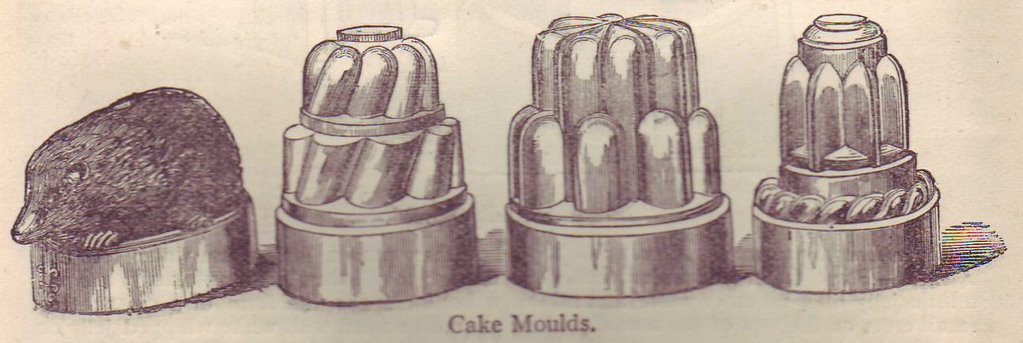
Gingerbread today is quite different from what it used to be. Once upon a time, “gingerbread” simply meant preserved ginger. By the fifteenth century it was a “cake” made from a dense dough of breadcrumbs or ground almonds mixed with honey or spices. Often this dough was pressed into moulds with very intricate designs. There were many varieties of gingerbread in medieval times: ‘coarse’, ‘fine’, white, red (coloured with red wine or sandalwood), and gilded (with real gold). Here is a small sample of recipes from over the centuries, to give you an idea of the development into gingerbread as we know it now. If you are not familiar with reading very old recipes, be patient! The language gets easier as you go along, although old recipes are rarely as easy to understand as we expect nowadays.
There are some wonderful pictures of old Gingerbread moulds HERE and HERE.
FIFTEENTH CENTURY:
Gyngerbrede.
Take a quart of honey and sethe it and skime it clene; take Safroun, pouder Pepir and throw theron; take gratyd Brede and make it so chargeant that it wol be y-lechyd; then take pouder canelle and straw ther-on y-now; then make it square, lyke as thou wolt leche yt; take when tho lechyst hyt, an caste Box leves a -bowyn, y-stykyd ther-on, on clowys. An if thou wold have it Red, colour it with Saunderys y-now. From: Austin, Thomas. Two Fifteenth-Century Cookery-Books. Harleian MS. 279 & Harl. MS. 4016, with extracts from Ashmole MS. 1429, Laud MS. 553, & Douce MS 55. London: for The Early English Text Society by N. Trübner & Co., 1888.
SIXTEENTH CENTURY:
To make white Ginger bread.
Take Gumma Dragantis* half an once, and steep it in rosewater two daies, then put thereto a pound of sugar beaten and finely serced, and beat them well together, so that it may be wrought like paste, then role it thin into two Cakes, then take a fewe Jordain almonds and blaunch them in colde water, then dry them with a faire Cloth, and stampe them in a mortar very finelye, adding thereto a little rosewater, beat finely also the whitest Sugar you can get and searce it. Then take Ginger, pare it and beat it very small and serce it, them put in sugar to the almonds and beat them together very well, then take it out and work it at your pleasure, then lay it even upon one of your cakes, and cover it with an other and when you put it in the molde, strewe fine ginger both above and beneathe, if you have not great store of Sugar, then take Rice and beat it small and serce it, and put it into the Morter and beat them altogether.
*Gumma Dragantis = gum traganth. From: A book of cookrye Very necessary for all such as delight therin. Gathered by A.W. At London : Printed by Edward Allde, 1591
SEVENTEENTH CENTURY:
To make course Gingerbread.
Take a quart of honie and set it on the coals and refine it; then take a penny worth of ginger, as much pepper, as much Licoras; and a quarter of a pound of Aniseedes, and a pennyworth of Saunders; All these must be beaten and searsed, and so put into the hony: then put in a quarter of a pint of Claret wine or old Ale: then take three penny Manchets finely grated and strow it amongst the rest, and stirre it till it comes to a thick Past, then make it into Cakes, and drie them gently. From: ‘Countrey contentments, in two bookes the first, … The second intituled, The English husvvife: containing the inward and outward vertues which ought to be in a compleate woman: as her phisicke, cookery, banqueting-stuffe, distillation, perfumes, wooll, hemp, flaxe, dairies, brewing, baking, and all other things belonging to an houshold. A worke very profitable and necessary for the generall good of this kingdome., Markham, Gervase: Printed at London, 1615.
To make white Gingerbread.
Take halfe a pound of marchpaine* past, a quarter of a pound of white Ginger beaten and cerst, halfe a pound of the powder of refined sugar, beate this to a very fine paste with dragagant** steept in rose-water, then roule it in round cakes and print it with your moulds: dry them in an oven when the bread is drawn foorth, upon white papers, & when they be very dry, box them, and keepe them all the yeare.
*marchpaine past = marzipan paste
** dragagant = gum traganth From: Delightful Daily Exercise for Ladies and Gentlewomen; John Murrell; 1621
To make Ginger Bread.
Take a pound of jordan almonds, and a penny manchet grated and sifted and mingled amongst the almond paste very fine beaten, an ounce of slic’t ginger, two thimble fulls of liqouras and aniseed in powder finely searced, beat all in a mortar together, with two or three spoonfuls of rose water, beat them to a perfect past with half a pound of sugar, mould it and roul it thin, then print it and dry it in a stove, and gild it if you please.
Thus you may make ginger bread or sugar plate, putting sugar to it as abovesaid. From: The accomplisht cook, or, The art and mystery of cookery wherein the whole art is revealed in a more easie and perfect method than hath been publisht in any language … .Robert May; London : Printed by R.W. for Nath. Brooke ..., 1660
To make Ginger-bread.
Take three stale Manchets grated and sifted, then put to them half an Ounce of Cinnamon, as much Ginger, half an Ounce of Licoras and Aniseeds together, beat all these and searce [sift] them, and put them with half a Pound of fine Sugar, boil all these together with a quart of Claret, stirring them continually till it comes to a stiff Paste, then when it is almost cold, mould it on a Table with some searced Spice and Sugar, then bake it in what shape you please. From: The queen-like closet; or, Rich cabinet stored with all manner of rare receipts for preserving, candying &c; cookery. Very pleasant and beneficial to all ingenious persons of the female sex. By Hannah Wolley; London : printed for R. Lowndes at the White Lion in Duck-Lane, near West-Smithfield; 1670
EIGHTEENTH CENTURY:
Thick Ginger-Bread
A pound and a half of Flower, takes up one pound of Treacle, almost as much Sugar, an ounce of beat Ginger, two ounces of Carraway-seeds, four ounces of Citron, and Lemon-peel Candy’d, the Yolks of four Eggs, cut your Sweet-meats, mix all, and bake it in large Cakes, on Tin-plates. From: A collection of above three hundred receipts in cookery, physick and surgery; for the use of all good wives, tender mothers, and careful nurses. Kettilby, Mary; 1714
To make an excellent sort of Ginger-Bread.
Take a quart of Damask-rose-water, and four pound of double refin’d Sugar; two Quarts of fine Flour, or as much as will make it up into a pretty stiff paste. Take Ginger, Carraway-seed, and Coriander-seed, of each two Ounces, finely powdered; Nutmets finely powdered one Ounce and a half; Anniseed, and Fennel-seed, powder’d, of each three quarters of an Ounce; of Cloves powdered, almost half an Ounce. Mix all these well together in a Mortar. Then reserve this powder for use. Put in two Ounces of it into a Quart of your Syrup made of Rose-water and Sugar to your two Quarts of Flour; make your Paste into thin square Cakes, and bake it. From: The cooks and confectioners dictionary: or, the accomplish’d housewives companion. ... The second edition with additions. Revised and recommended by John Nott; London : printed by H. P. for C. Rivington, 1724
To make fine Gingerbread.
Take two pounds and a half of flour; mix an ounce of beat ginger with it, and half a pound of brown sugar; cut three quarters of a pound of orange-peel and citron not too small; mix all these together; take a mutchkin and a half of good treacle, and melt it on the fire; beat five eggs; wet the flour with the treacle and eggs; weight half a pound of fresh butter, Scots weight*; melt it and pour it in amongst your other materials; cast them all well together; butter a frame, and put it in the oven. This gingerbread wont fire without frames. If it rises in blisters when it is in the oven, run a fork through it. It makes very fine plain bread without the fruit, with a few caraway seeds. All these cakes must be fired in an oven neither too hot nor too cold. The way to know when the cakes are fired enough is to run a clean knife down the middle of them; if the knife comes out dry, they are enough; if the least of it sticks to the knife, put it in the oven again. From: Cookery and pastry. As taught and practised by Mrs. Maciver, ... A new edition. To which are added, for the first time, figures of dinner and supper courses, from five to fifteen dishes. Also, a correct list of everything in season ... . MacIver, Susanna; Edinburgh : printed for C. Elliot: and G. G. J. and J. Robinson, London, 1787
NOTE: Mrs McIver specifies “Scots weight” because until 1824 when they were forced to change to Imperial measurements, Scottish measures were different. One Scottish pound weight was equivalent to one pound, six ounces and one dram in Imperial weight.
NINETEENTH CENTURY:
Gingerbread.
Mix with two pounds of flour half a pound of treacle, three quarters of an ounce of caraways, one ounce of ginger finely sifted, and eight ounces of butter.
Roll the paste into what form you please, and bake on tins, after having worked it very much, and kept it to rise.
If you like sweetmeats, add orange candied; it may be added in small bits.
Another sort. - To three quarters of a pound of treacle beat one egg strained; mix four ounces of brown sugar, half an ounce of ginger sifted; of cloves, mace, allspice, and nutmeg, a quarter of an ounce, beaten as fine as possible; coriander and caraway seeds, each a quarter of an ounce; melt one pound of butter, and mix with the above; and add as much flour as will knead into a pretty stiff paste; then roll it out, and cut into cakes.
Bake on tin-plates in a quick oven. A little time will bake them.
Of some, drops may be made.
A good plain sort. - Mix three pounds of flour with half a pound of butter, four ounces of brown sugar, half an ounce of pounded ginger; then make into a paste with one pound and a quarter of treacle warm.
A good sort without Butter. - Mix two pounds of treacle; of orange, lemon, and citron and candied ginger, each four ounces, all thinly sliced; one ounce of coriander seeds, one ounce of caraways, and one ounce of beaten ginger, in as much flour as will make a soft paste; lay it in cakes on tin-plates, and bake it in a quick oven. Keep it dry in a covered earthen vessel, and it will be good for some months.
Note. If cake or biscuits be kept in paper, or a drawer, the taste will be disagreeable. A pan and cover, or tureen, will preserve them long and moist. - Or, if to be crisp, laying them before the fire will make them so. [From: A New System of Domestic Cookery; By A Lady (Rundell, Maria Eliza Ketelby). Boston: 1807]
Orange Gingerbread.
Sift two pounds and a quarter of fine flour, and add to it a pound and three quarters of treacle, six ounces of candied orange peel cut small, three quarters of a pound of moist sugar, one ounce of ground ginger, and one ounce of allspice : melt to an oil three quarters of a pound of butter, - mix the whole well together, and lay it by for twelve hours, - roll it out with as little flour as possible about half an inch thick, cut it into pieces three inches long and two wide, - mark them in the form of chequers with the back of a knife, put them on a baking plate about a quarter of an inch apart, - rub them over with a brush dipped into the yolk of an egg beat up with a tea-cupful of milk, bake it in a cool oven about a quarter of an hour; - when done, wash them slightly over again, - divide the pieces with a knife, (as in baking they will run together.) A Modern System of Domestic Cookery: Arranged on the Most Economical Plan. M. Radcliffe; 1823.
Gingerbread for Voyages or Travelling.
Three pounds of treacle, four pounds of flour, half a pound of sugar, both well sifted, two ounces of pounded ginger, a quarter of an ounce of allspice, a quarter of a pound of orange-peel, two ounces of caraway-seeds, a quarter of a pound of citron, a quarter of a pound of almonds, a pound of butter; let the almonds be blanched and cut with the citron and orange-peel; it ought not to be much handled, but well mixed ; bake it in small cakes or nuts; give it a quick oven.
This bread, baked with the fruit pounded, is to be very well dried in a cool oven, and then to be rasped, and again kneaded, with as much butter and treacle as it will take ; knead up with more fruit and spices; bake it well, without burning; dip it in spirits of wine, with a few drops of the essence of caraway, cinnamon, or cloves; dry it in the oven; wash it over with isinglass and sugar, or white of egg ; dry it again, and wrap it up in writing- paper very close ; pack it in a lined box, exclude the air, and it will keep years in a dry, but not warm place.
This is excellent for sea store. [Domestic economy, and cookery, for rich and poor, by a lady; London; 1827]
Honeycomb Gingerbread.
Half a pound of flour, half a pound of the coarsest brown sugar, a quarter of a pound of butter, one dessert-spoonful of allspice, and double that quantity of ginger, half the peel of a lemon grated, and the whole of the juice. Mix all these ingredients together, adding about half a pound of treacle, so as to make a paste sufficiently thin to spread upon sheet tins. Beat it well, butter the tins, cut it into squares with a knife, the usual size of wafer biscuits, and roll each round the fingers as it is raised from the tin. This paste, put into a jar, and covered closely, will keep for a month; but the biscuits will be found best when newly baked. From: The Practice of Cookery; Mrs.Dalgairns; Scotland; 1840
Cocoa-Nut Gingerbread.
Mix well together ten ounces of fine wheaten flour, and six of flour of rice (or rice ground to a powder), the grated rind of a lemon, and three-quarters of an ounce of ginger: pour nearly boiling upon these a pound of treacle, five ounces of fresh butter, and five of sugar, melted together in a saucepan; beat the mixture, which will be almost a batter, with a wooden spoon, and when quite smooth, leave it until it is perfectly cold, then add to it five ounces of grated cocoa-nut, and when it is thoroughly blended with the other ingredients, lay the paste in small heaps upon a buttered tin, and bake them in a very slow oven from half to three-quarters of an hour.
Flour, 10oz.; ground rice, 6 oz.; rind of 1 lemon; ginger, ¾ oz.; treacle, 1 b.; sugar, 5 oz.; cocoa-nut, 5 oz.
Or: Flour, ½ lb, ground rice ½ lb. ginger, ¾ oz.; rind of one lemon; butter, 5 oz.; sugar, 5 oz.; treacle, 1 lb,; cocoa-nut 6 ½ oz. [From: Modern Cookery for Private Families; Eliza Acton, London; 1845]
NOTE: Eliza Acton was the first cookbook writer to list the ingredients separately from the method. To her we are eternally grateful.
Cup Gingerbread.
Mix together 6 cups of flour; 1 cup of butter; 1 cup of sugar; 1 cup of molasses; 1 cup of milk; 4 eggs well beaten; 1 nutmeg, grated; 3 table-spoonsful of ginger ; some grated orange-peel; 1 dessert spoonful of pearl-ash.
Bake it quickly. [The Ladies' New Book of Cookery: A Practical System for Private Families; Sarah Josepha Buell Hale; 1852]
Swiss Gingerbread.
Ingredients: 1 ½ lb. of flour, 6 oz. of skinned almonds, 1 lb. of warm honey, 1 oz. of ground coriander seeds, 1 oz. of ground ginger, ½ oz. of ground cinnamon, ½ oz. of ground cloves, ½ gill of orange flower water, 1 oz. of carbonate of soda.
Work all the ingredients (except the almonds) into an elastic paste, allow it to rest till the next day, covered over in a cold place ; then roll it out, place the whole almonds in rows upon the paste, roll it up in the form of a bolster, bake it in a long shaped buttered tin mould, and when done, and cold, cut it in slices with a sharp knife. [Francatelli, Charles Elmé; The Royal English and Foreign Confectioner: A Practical Treatise…; 1862]
NOTE: Francatelli was for a brief time Chef to Queen Victoria.
Gingerbread, Flemish.
Warm one pound of treacle in a bowl before the fire, and stir into it six ounces of butter. When dissolved, beat in as much flour, with two tablespoons of oatmeal and half an ounce of powdered ginger, as will form a stiff batter. Beat it till smooth, and add two ounces of candied lemon sliced as thin as possible. Butter some moulds, and bake in a quick oven for nearly an hour. From: Cassell’s Dictionary of Cookery; circa 1870’s
Gingerbread, Mrs. Smith’s.
Melt together three-quarters of a pound of treacle a quarter of a pound of honey, and half a pound of fresh butter. Mix one pound of flour with two ounces of candied lemon, chopped small, one ounce of powdered ginger, and half a teaspoonful of powdered cinnamon. Beat all well together, and bake in well-buttered, shallow tins, in a moderate oven. [From Cassell’s ] From: Cassell’s Dictionary of Cookery; circa 1870’s
Gâteau d’Epice.
Gâteau d’Epice is the name for French gingerbread flavoured with vanilla. Pound a quarter of a pod of vanilla with a dessert-spoonful of brandy. Stir it into half a pound of treacle, and put it into a saucepan with quarter of a pound of butter, half an ounce of powdered cinnamon, half an ounce of ground ginger, an ounce of candied lemon, orange, and citron together, cut into thin slices, and a pinch of salt. Let these simmer gently for five or six minutes, stirring all the time, then pour the mixture into a bowl, and when cool, add as much finely-sifted flour as will make it into a solid batter. Bake in a slow oven on buttered tins, in small rounds, placed at a little distance from each other. Time to bake, three-quarters of an hour. Probable cost, 1s. 6d. per pound. From: Cassell’s Dictionary of Cookery; circa 1870’s
Light Gingerbread.
One pint New Orleans molasses; set on the corner of the range until warm enough to melt one-half pound of lard in it; beat it up well; one half nutmeg, one teaspoonful each of cinnamon and cloves, and two tablespoonfuls ginger, a pinch of salt, one cupful milk stirred in two beaten eggs, and prepared flour, with two teaspoonfuls baking powder added; mix until just stiff enough to break off clear when you pour it from the spoon. New York Times Dec 10, 1876
[this recipe is "Light" on account of the use of a leavening agent]
Green Ginger Cake.
(Sent by Mrs. Abel to Mrs. Proctor, N. Berwich. 1879)
½ lb. pounded sugar, ½ lb. fresh butter, 4 eggs, ¼ lb. Oswego flour [cornflour], ¼ lb fine flour, ¼ lb. ginger take out of syrup, chopped fine, ½ teaspoonful powdered ginger, ½ teaspoonful baking powder, a pinch of salt.
Beat sugar and butter together till very light; add the eggs, one by one, beating each thoroughly well in as you add it. Mix all well together, the Oswego flour, fine flour, salt &c., and then add them to the mixed butter, sugar, and eggs; mix in lightly, and bake in a moderate oven.
(This makes an excellent pudding, if you add more ginger, and serve with a custard sauce flavoured with the syrup of the ginger.) From: The Cookery Book of Lady Clark of Tillipronie; 1909.
The next recipe, also from Lady Clark, contains yeast, so is a genuine sweet raised bread, not a cake (at least not in the modern sense.)
Ginger Cake. No.3 (Isabel Heywood).
2 lbs fine flour, ¼ lb butter, ¼ lb sugar, 2 teaspoonfuls each powdered ginger and pounded allspice thoroughly mixed together, 2 tablespoonfuls yeast. Make into a light dough with warm milk. Bake. From: The Cookery Book of Lady Clark of Tillipronie; 1909.
This next one would make a very large cake, but it sounds delicious with a lot of citrus flavours and some caraway seeds. If you intend to try it, note that it is meant to be made in at least a week in advance. Also note that the method instructions say to include a dessertspoonful of soda, which does not appear in the ingredient list.
Gingerbread Loaf or “American Cake.”
For tea or for luncheon.
1 lb. 14 ozs. flour, ½ lb. butter, 2 lbs. treacle, ½ lb. powdered sugar, ¼ lb. candied lemon peel also ¼ lb. chopped citron peel if liked, a tablespoonful of caraway seeds, 1 lemon squeezed and its peel grated, 1 ½ ozs. of powdered ginger, ¼ lb citron, ½ teaspoonful beer (“a tablespoonful” in another copy), 2 eggs.
Melt the butter and the treacle together, and rub in the sugar with a dessertspoonful of soda which is not quite ½ oz. (another copy says a teaspoonful). Bake like any other cake, having ornamented the top with slices of citron or caraway comfits if you like, but do not cut it for eating in under a week. From: The Cookery Book of Lady Clark of Tillipronie; 1909.
TWENTIETH CENTURY:
Gingerbread Men
2 cups of molasses.
1 cup of equal parts of butter and lard, mixed.
1 level tablespoonful of ginger.
1 teaspoonful of soda.
Flour to mix very stiff.
Melt the butter, add the molasses and ginger, then the soda, dissolved in a teaspoonful of boiling water; stir in flour till the dough is so stiff you cannot stir it with a spoon; take it out on the floured board, and roll a little at a time, and with a knife cut out a man; press currants in for eyes and for buttons on his coat. Bake in a floured pan. The Fun of Cooking: A Story for Boys and Girls. [American book] 1915.
Parliament Gingerbread [added 2009]
(With apologies to the English Suffragists)
½ lb. flour
½ lb. treacle
1 oz. butter
½ small spoon soda
1 dessert spoon ginger
1 dessert spoon mixed spices
½ cup sugar
A bit of hot water in which soda is dissolved.
Put flour in a basin, and rub in butter, and dry ingredients; then, soda and water; pour in treacle, and knead to smooth paste. Roll quite thin and cut in oblongs. Bake about ¼ hour. [The Suffrage Cook Book, Mrs L.O.Kleber,1915]
Ye Ancient Gingerbread [for gingerbread men]
One pint of sorghum molasses, one cup (genuine) sour buttermilk, one cup home-made leaf lard, one level tablespoon soda, three-quarters tablespoon ginger, one teaspoon each allspice, cinnamon, one-quarter teaspoon salt, two eggs, and Sperry [brand] flour to make a soft dough.
Mix lard and molasses, add beaten eggs, then add spice, salt and soda mixed with about one cup Sperry flour and alternate with the milk, beating all well together. Finally add flour enough to make a soft dough. Roll rather thick, cut in fantastic shapes, “little gingerbread men,” if to please the little folks, or any desired shape. Have a moderate heat only, as bread should not be baked too quickly. The Bride’s Cookbook. Edgar William Briggs, California,1915
World War I Gingerless, molassessless, eggless, butterless, milkless gingerbread.
The National Emergency Food Garden Commission in Washington came to the assistance of a US Navy baker in 1917. Paul R. Wallace had heard of a 'pumpkinless pumpkin pie’ recipe sent to the commission by a Mrs. G. M. King of New Jersey, and had tried it out on his crew, whose only complaint was that he did not make enough of it. He asked Mrs King in a letter if she could assist him by creating a gingerbread without ginger, molasses, spices, and butter.
Amazingly, Mrs King came up with the solution.
Dissolve two cups of brown sugar in a little black coffee and add one dessertspoonful of soda. Add four tablespoons of nut oleomargarine, two tablespoons of lard, a little salt, then one scant cup of hot black coffee, and last, but not least, pepper to taste. Take one cup of graham and three cups of wheat flour and roll it out about one inch thick.
[This recipe would equally well fit in the Coffee Recipe feature on the Companion to the Old Foodie Site.]
Cornmeal Gingerbread (U.S Food Administration)
1 cup cornmeal
1 cup wheat flour
1 teaspoon soda
¾ teaspoon salt
2 teaspoons ginger
1 teaspoon cinnamon
½ teaspoon cloves
1 cup sour milk
1 cup molasses
2 tablespoons shortening
1 egg (omitted if desired)
Sift together the dry ingredients.
Combine the milk, molasses, melted shortening, and beaten egg. Add the liquid ingredients to the dry. Stir well. Bake in a moderate oven.
Two cups of buckwheat flour may be substituted for the cornmeal and flour in the above recipe. This will have the characteristic flavour of buckwheat. If it is too strong, use only 1 cup buckwheat and 1⅛ cups white flour. Two and a half cups of rye flour may also be substituted. In using rye and white flour a larger quantity is necessary because these flours absorb less liquid than do the cornmeal and buckwheat. From: Daily Menus for War Service; Thetta Quay Franks, 1918
Suffrage Gingerbread.
1 cup ( ¼ lb.) ground rice
2 cups ( ½ lb.)
1 cup ( 4 oz. whole wheat flour)
4 teaspoons baking powder
1 tablespoon ginger
1 teaspoon mace
¾ cup (1 ½ gills) honey or molasss
½ cup (1 gill) milk or cream
1 egg, beaten
1 cup (4 oz.) ground almonds
1 cup ( ½ lb. butter substitute
1 lemon
½ teaspoon salt.
Into a bowl sift rice, flours, baking powder, and spices. Melt molasses, add milk and butter substitute, and when dissolved, pour amongst flours; add grated lemon rind, egg, and salt. Pour into a greased and floured flat tin and bake in a moderate oven 45 minutes. Turn out and cool and cut into slices. If liked, the gingerbread may be frosted before it is cut. Economical Cookery, Marion Harris Neil (Boston, 1918)
Gingerbread Custard. [to use up stale gingerbread]
1 cupful stale gingerbread, broken in pieces
¼ cupful sugar
2 eggs
1 pint milk.
Scald the milk; beat the egg-yolks and sugar together. Add the scalded milk gradually to the egg mixture. Pour this over the gingerbread which has been placed in a buttered baking dish. Place in a pan of hot water and bake in a 3500 F oven for about thirty minutes or until set. Cover with a meringue made from egg whites, six tablespoonfuls of granulated sugar, and one-fourth teaspoonful of vanilla, and brown in a 3000 F oven, about fifteen minutes.
[From Good Housekeeping’s book of menus, recipes, and household discoveries, published about 1922]
GINGERBREAD MEN, GINGERBREAD FISH, AND GINGERBREAD HOUSES
Gingerbread.
The joy of the old-fashioned gingerbread, sold at every English fair was, of course, the fact that it was fashioned into enchanting shapes of animals and human beings; for choice, kings and queens in gilded crowns. But the expression, “the gilt is off the gingerbread” has outlived, in England, the custom of giving gingerbread in so romantic a form.
Even the most blasé modern child feels the fascination of these fantastic delicacies, and they are very easily made.
Here is the recipe:
Two pounds of flour, a quarter of a pound of brown sugar, one ounce of ground ginger, two ounces of candied peel, half an ounce of caraway seeds, half an ounce of cinnamon, a quarter of a pound of butter, two ounces of hot treacle.
Mix the dry ingredients well together, then cream the butter and mix well, add the hot treacle.
Knead it into a thick paste. If it is too stiff, moisten it with a very little milk. The paste must be very smooth. Roll out thin and cut it into any shape, making any design upon it with the back of a knife. The shape of the gingerbread need be limited only by the skill or fancy of the artist. Fishes are easy to draw, so are birds, and pigs, and elephants, and humans in Anglo-Saxon attitudes. Bake them till they are crisp all through.
A “Gingerbread House is” an old-fashioned Christmas treat that is worth making for the delight of nurseries where the children are not too blasé; if the children are allowed to help to make it, no child will be too modern to enjoy it. From: The Gentle Art of Cookery, by Mrs. C.F. Leyel and Miss Olga Hartley (1925)
Gingerbread Pudding.
¼ lb. flour
¼ lb breadcrumbs
¼ lb suet
2 oz sugar
1 teaspoonful ground ginger
2 tablespoonfuls treacle
1 lemon
1 egg
1 teacupful milk
1 teaspoonful carbonate soda
pinch of salt.
Mix dry ingredients, add grated rind and juice of lemon.
Mix well with warmed milk, and steam at least 2 hr.
Mrs. Jowett, 9 St. Andrew’s Place, Listerhills, Bradford. From the Yorkshire Observer (newspaper) cookbook, 1934-5
Sultana Gingerbread without Eggs or Milk.
1 ½ lb self-raising flour
¼ lb brown sugar
¼ lb dripping
½ teaspoonful salt
6 oz. sultanas
1 tablespoonful caraway seeds,
1 ½ gills golden syrup
2 oz cut candied peel
1 teaspoonful ground ginger
1 ½ gills water.
Put flour and salt in a basin. Rub in the dripping, add sugar, sultanas, candied peel, caraway seeds, and ground ginger. Mix to a stiff batter with the golden syrup and water. Pour the mixture into a greased cake tin and bake in a moderate oven for about 1 ½ hr.
Mrs A. Betteridge, 34 West Bank, Riddlesden, Keighley. From the Yorkshire Observer (newspaper) cookbook 1934-5
Marshmallow Gingerbread.
Take ½ lb. marshmallows, ½ lb butter, ¼ cup golden syrup, 2 cups flour, egg [presumably one, but not stated], teaspoon ground ginger, ½ lb preserved ginger, tablespoon brown sugar, ½ teaspoon soda bicarb., little milk.
Reserve 12 marshmallows for decoration, place rest in saucepan, stir over gentle heat tull melted, add butter, sugar, golden syrup, stir all well together till ingredients quite melted and mixed thoroughly, without making too hot. Leave pan to cool. Sift flour, ground ginger into basin, add finely chopped preserved ginger. Beat egg, stir into marshmallow mixture, beat well, add flour, mix well. Dissolve soda in little milk, add to mixture. Turn into well-buttered baking dish, bake in moderate oven 30 minutes. Allow to cool a couple of minutes after taking from oven; arrange 12 marshmallows in shapes on top, return to oven to brown lightly. From: “Truth” and “Daily Mirror” Cookery Book; Australia; 1943.
[Wartime] Gingerbread Men.
Ingredients: 2 oz. sugar or syrup, 2 oz. margarine, 8 oz. plain flour, ½ level teaspoon mixed spice, 2 level teaspoons ginger, lemon substitute, 1 level teaspoon bicarbonate of soda.
Method: Melt in a pan the syrup or sugar and margarine. Pour into a bowl. Add some flour and the spice and lemon substitute. Stir well. Dissolve the bicarbonate of soda in a tablespoon of tepid water and add to the mixture. Continue stirring, gradually adding more flour. Finish the process by turning out the mixture on to a well-floured board. Knead in the remainder of the flour. Roll a small ball for the head, flatten it and place it on the baking tin. Roll an oblong for the body and strips for arms and legs. Join these together with a little reconstituted egg and put currants for the eyes. Food Facts leaflet No. 233 from the Ministry of Food in December 1944.
Ginger Cake.
1 tablespoon shortening
½ cup sugar
1 egg
½ cup molasses
1 teaspoon soda
½ cup sour milk
1 ¾ cups flour
2 teaspoons ginger
1 teaspoon cinnamon
½ teaspoon salt
Cream shortening, sugar, and egg together. Stir in molasses. Dissolve soda in the sour milk. Mix and sift flour, ginger, cinnamon, and salt. Add alternately with the sour milk to the first mixture. Turn into a greased shallow pan. Bake in a hot oven (400oF.) 25 to 30 minutes. Serve hot with whipped cream. From: The Lilly Wallace New American Cookbook, 1946.
Acadian Gingerbread.
This recipe is from the Madawaska (Maine) Historical Society’s ‘Reunion Families’ Favorite Recipes’, and was submitted by Therese Dufour for the Hebert family.
Thankyou to Judy Glattstein of BelleWood Gardens, who alerted me to this recipe, and has some wonderful pictures of historic gingerbread in her postings of December 10th and 12th 2006.
Pain Sucré / Gingerbread.
Ingredients.½ cup shortening. 2 eggs. 1 ½ teaspoon baking soda. 1 teaspoon ginger. ½ teaspoon salt. 1 cup boiling water or coffee. ½ cup white sugar. 2 ½ cups flour. 1 teaspoon cinnamon. ½ teaspoon cloves. 1 cup molasses.
Preparation:
Cream shortening; add sugar and mix well. Add eggs and beat until fluffy. Sift dry ingredients together in another bowl. Combine liquids. Add dry ingredients alternately with liquids, ending with boiling water or coffee. Pour into a greased and floured square pan, 8x8x2-inches. Bake at 350 degrees F. for about 45 minutes or until cake separates from the sides of the pan. Serve hot with whipped cream or plain.
[This recipes would equally well fit in the Coffee Recipe feature on the Companion to the Old Foodie Site.]
TWENTY-FIRST CENTURY:
Elise Bauer has a recipe for Gingerbread Men at SIMPLY RECIPES.
REGIONAL VARIATIONS:
The following recipes are from my personal collection. I have no idea how old they are, only that they are very good.
Grasmere Gingerbread.
8 oz. wholemeal flour
½ teaspoon bicarb soda
½ teaspoon cream of tartar
2 teaspoons ground ginger
6 oz butter
6 oz brown sugar
1 level tablespoon Golden Syrup.
Mix the flour, bicarb soda, cream of tartar and ground ginger.
Rub in the butter.
Add the sugar and Golden Syrup and mix well. Press into a greased 8 inch diameter tin.
Bake in a cool (325oC) oven for 45-50 minutes.
Leave in the tin 15 minutes. Cut into wedges.
Yorkshire Parkin.
4 level tablespoons Golden Syrup
4 level tablespoons Treacle
3 oz soft dark brown sugar
8 oz butter
¼ pint milk
8 oz plain flour
2 teaspoons ginger
2 teaspoons bicarb soda
1 teaspoon salt
8 oz fine or medium oatmeal.
Melt the syrup, treacle, sugar, butter and milk together gently.
Sif the flour, ginger, bicarb, salt together and add the oatmeal.
Add the melted mixture to the dry mixture and beat till smooth.
Pour into a greased and lined 11 x 7 inch tin.
Cook in a cool (325oC) oven 40-45 minutes. It will shrink back from the sides of the tin, and look a bit sunken, but will spring back when cooked. Cool in the tin ten minutes before turning out.
Quotation for the Day ...
And I had but one penny in the world. Thou should’st have it to buy gingerbread. William Shakespeare, Love’s Labours Lost
There is a possibly apocryphal story that says that the ‘Declaration of the Three Powers’ in Iran was signed over a martini on this day in 1943. In this story, Stalin’s response to FDR’s offer of the drink was “Well, all right, but it is cold on the stomach.” Churchill was presumably offered one too, but his answer is not recorded – perhaps he refused and opted for his favourite tipple of brandy.
There is a long tradition of diplomatic decisions being negotiated or signed over a drink or dinner. A spectacular early example was the meeting between Henry VIII and Francis I of France at “The Field of the Cloth of Gold” in 1520, which almost emptied the coffers of both countries, although in the end achieved very little. Patrick Lamb, the chef to Queen Anne (1702-14) claimed that England’s “credit and esteem with foreign ministers” was founded on its impressive court banquets, and half a century later the Talleyrand (France’s Prime Minister) was in no doubt as to the importance of feeding well those with whom one wishes to negotiate.
Times have changed however, and the modern voter expects less conspicuous consumption to accompany the work of its elected representatives. There was a war on too, at the time of our story, so an even closer approximation to austerity would have been expected. FDR’s presidency was merely “the four martinis and lets have an agreement era”. At the tail end of the Vietnam conflict Nixon, Kissinger, and Chou En-lai signed the Shanghai Communique in 1972 over mai-tais. No-one so far has seen fit to blow the whistle on this cocktail diplomacy, but in that event, may I suggest a move to Pudding Diplomacy?
The martini has been called “America’s gift to the world”, although its exact origin and exact composition continue to be hotly debated. An equal mystery, but one less hotly debated (pudding cooks being more sanguine folks than cocktail drinkers perhaps) is the exact origin of “Diplomat Pudding”, or “Pouding à la Diplomate”. Its roots seem to be French, but the reason for its name is, to use dictionary-speak “obscure”. I welcome any suggestions or information, but in the meanwhile I offer a recipe from an American cookbook of 1893. It is “La Cuisine Française. French Cooking for Every Home. Adapted to American Requirements” by François Tanty. M.Tanty’s spelling and recipe clarity do leave something to be desired, but he could be expected to know about dinner-table diplomacy, as his qualifications are given as: ‘Late “Chef de Cuisine” of the Emperor Napoleon III and of the Imperial Family of Russia. Late proprietor of the “Grand Hotel” and the Restaurant Dussaux at St. Petersburg. Purveyor to the French and Russian Armies. Member of the Imperial Order of the Red Cross (Russia).’
Poudding Diplomate.
Proportions: For five persons.
Raisins: Malaga 2 oz. Sultana 2 oz. Corinth 2 oz. Lemon or orange peel 2 oz. Lady Fingers* ¼ lb. Eggs 5 Cornstarch 1 tablespoonful Milk 2 glassesful Rum 1 or 2 tablespoonsful Sugar 4 tablespoonsful.
Preparation: 1st In a cake-mould put a row of dried grapes (if possible, Malaga, Smyrna, or Corinth), and dices of preserved orange peel, then a row of lady fingers, then a row of grapes and so on, the last row being a row of lady fingers. Don’t fill the mould. 2nd. Make a sauce with 5 eggs, 1 tablespoonful corn starch, two glassesful milk, 1 or2 tablespoonsful rum, 4 tablespoonsful sugar, and mix the whole. 3rd. Pour this sauce in the mould, put in a bain-marie and bake in an oven (not too warm). 4th. Knock out the pudding on a dish and serve with a Sambayon [sic] sauce.
Sauce Sambayon.
Proportions: For five persons:
Yolks 2 Starch ½ tablespoonful [presumably he means Cornstarch] Sugar 2 tablespoonfuls Rum 1 tablespoonful Cream 2 glassesfulTime - 10 minutes. Preparation: 1st. In a sauce pan beat together 2 yolks, 1/2 tablespoonful corn starch, 2 tablespoonsful sugar, 1 tablespoonful rum, 2 glassesful cream till thick enough, and warm but don't allow it to boil. 2nd. Pour on the pudding.
*Lady fingers: may mean the dry plain cake used in trifle, or a variety of banana (in Australia); or okra; or a delicious nut, honey and fillo pastry similar to baklava. In this recipe, please use the first. Okra would not be good.
Monday’s Story …
A Fighting Punch.
A Previous Story for this Day …
Raffles hotel in Singapore opened on this day in 1887, and was the subject of our story “Liquid Lunches” on this day in 2005.
Quotation for the Day …
The rat stops gnawing in the wood, the dungeon walls withdraw, the weight is lifted ... your pulse steadies and the sun has found your heart, the day was not bad, the season has not been bad, there is sense and even promise in going on. Bernard de Voto; In praise of the martini, The Hour.

 Today, December 14th …